One local AI workspace with connected operating surfaces.
Explore Disp8ch features for WebChat, visual workflows, agents, Council, Hierarchy, Boards, Data Sources, Design Studio, Memory, and local models.
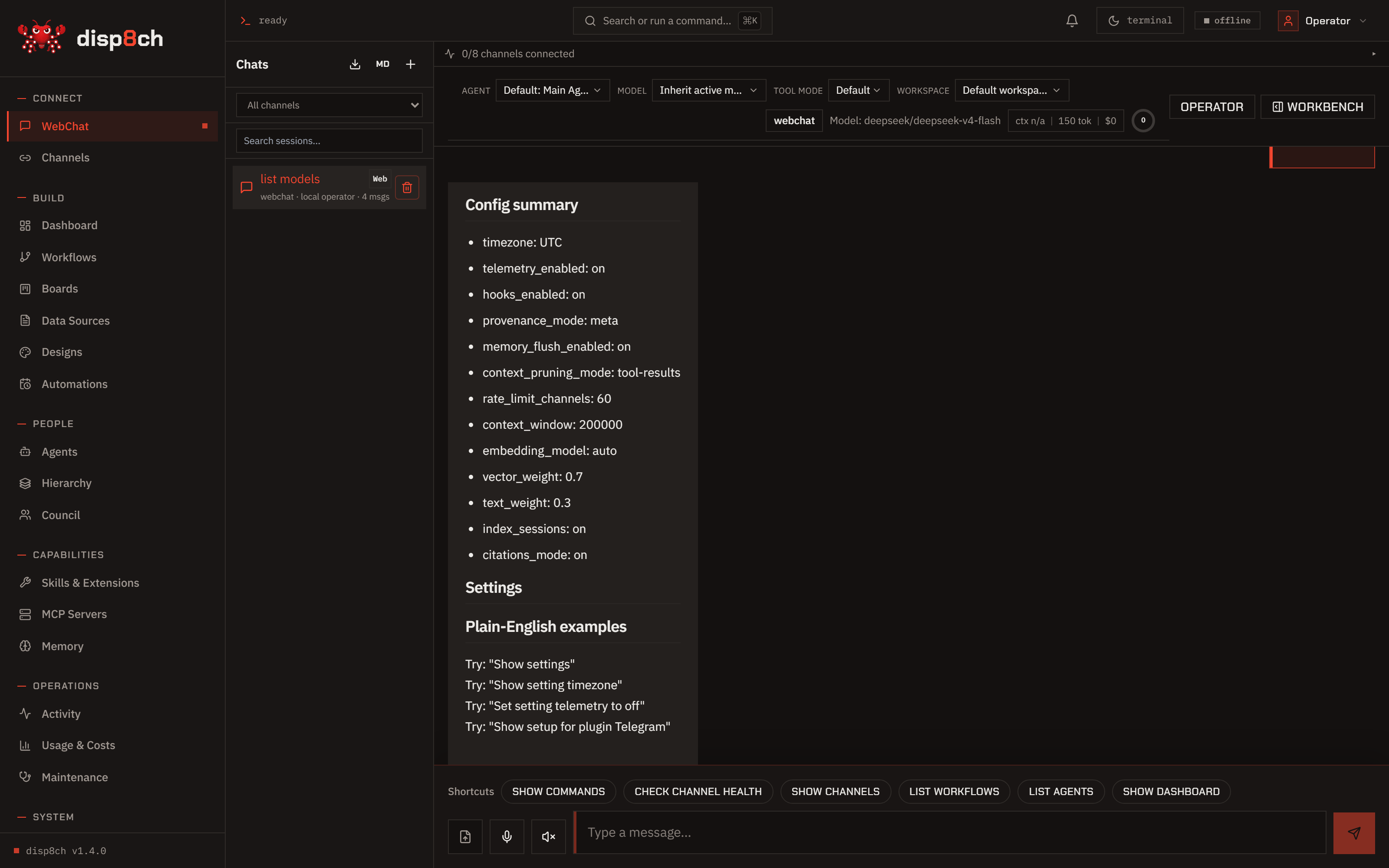
Agentic WebChat
WebChat is the command surface for the whole workspace. Ask questions, build workflows, inspect state, create tasks, run research, and hand work to agents without losing the audit trail.
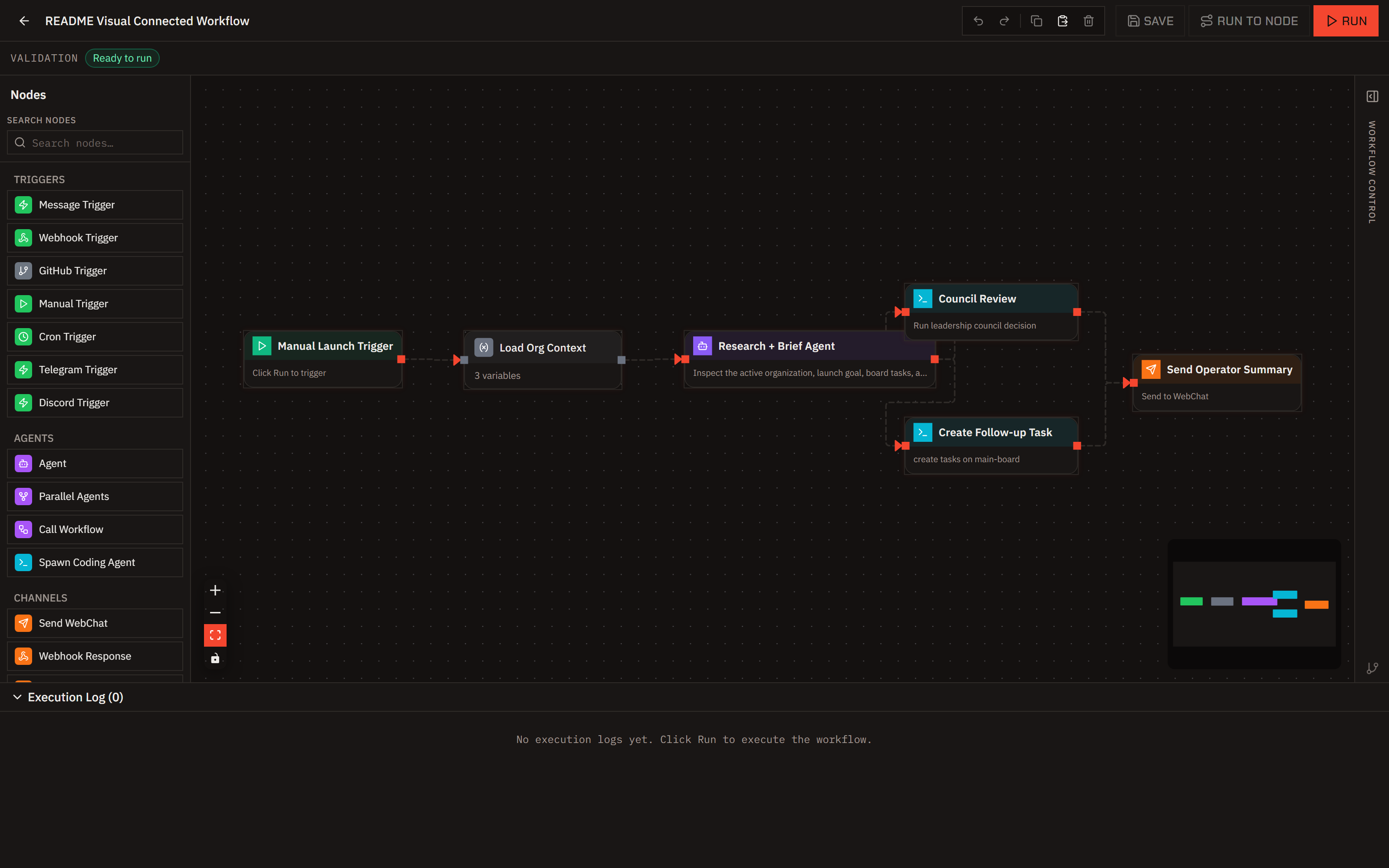
Visual Workflows
The workflow canvas turns repeatable work into connected nodes for triggers, agents, files, HTTP, RSS, documents, memory, logic, boards, channels, and response handling.
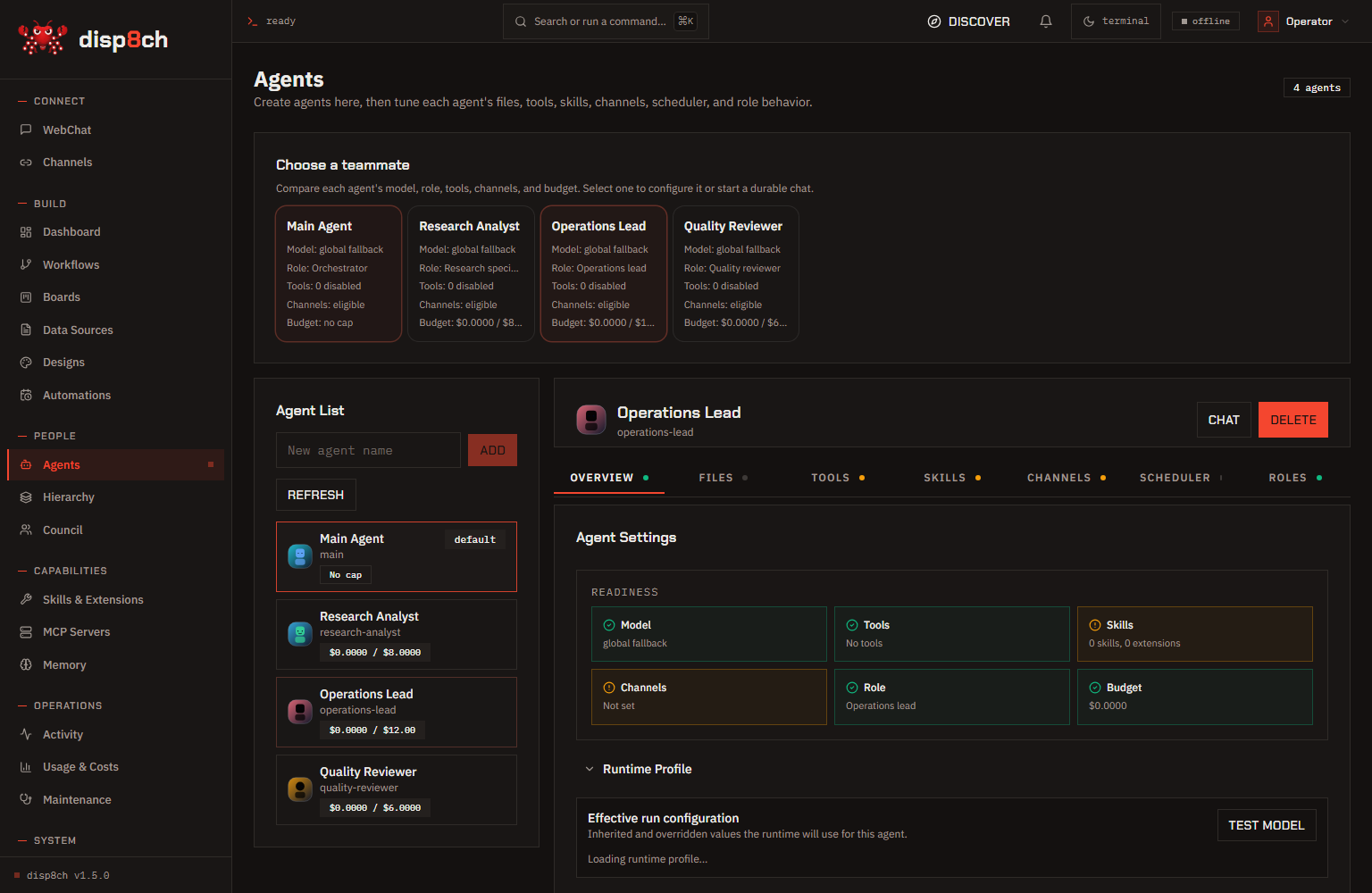
Agent Teammates
Agents in Disp8ch have profiles, tools, model overrides, skills, extensions, budgets, channel routing, workspace files, and observable activity.
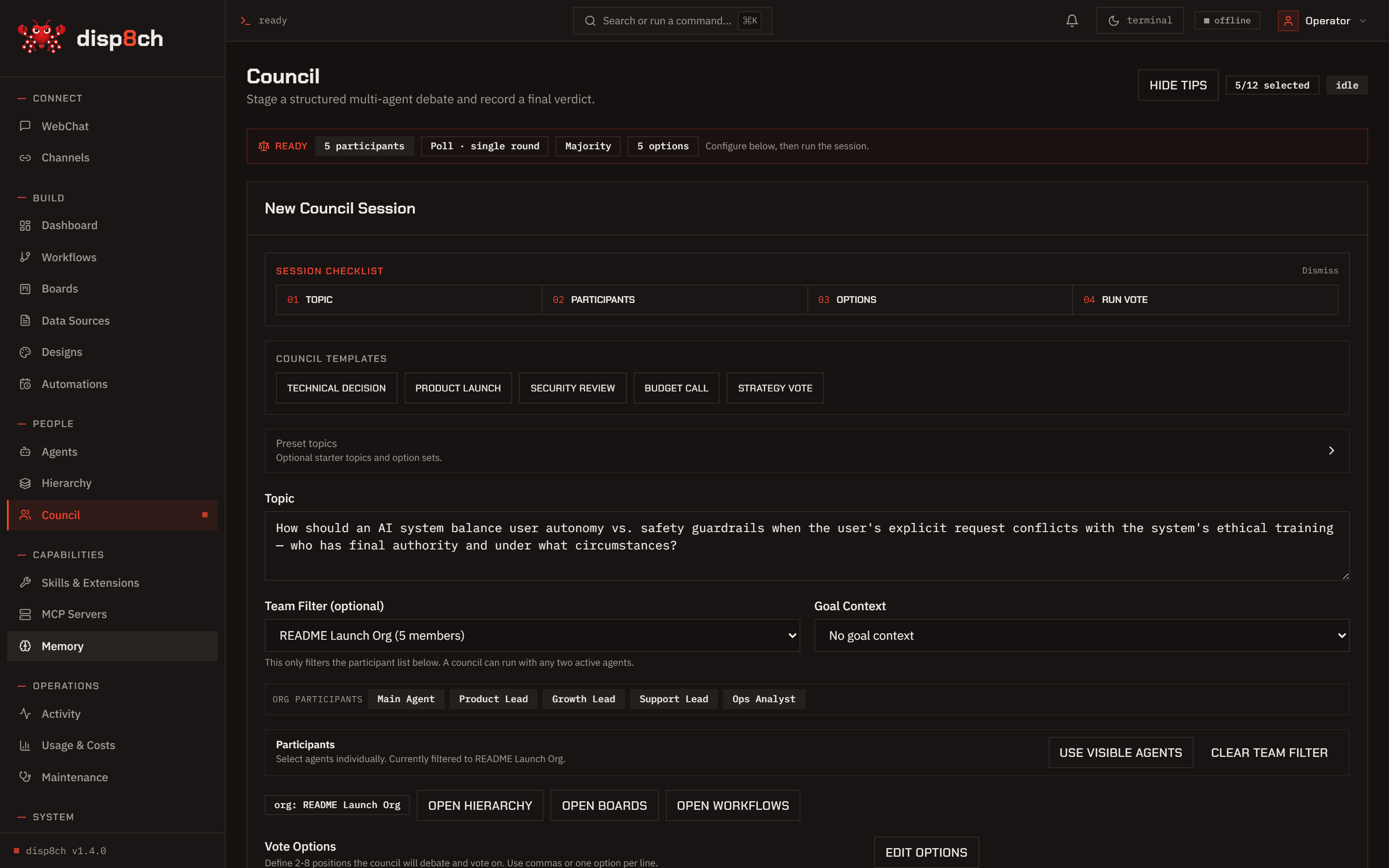
Council
Council sessions let agents debate options, vote, and record a verdict with dissent preserved. It is built for decisions where the reasoning matters as much as the final answer.
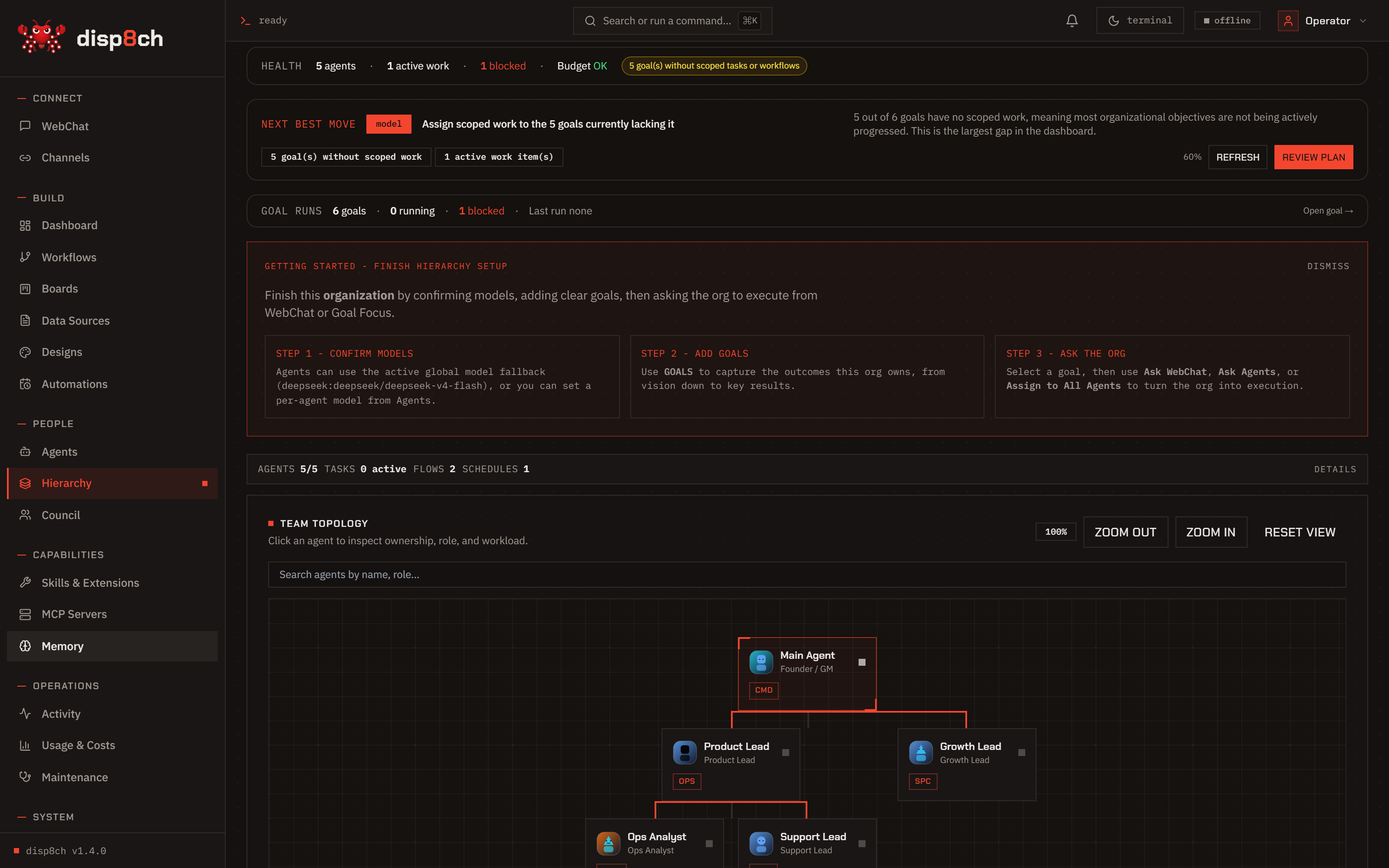
Hierarchy
Hierarchy gives agent work company-style structure: organizations, roles, goals, reporting lines, source packs, budgets, approvals, heartbeats, and workload.
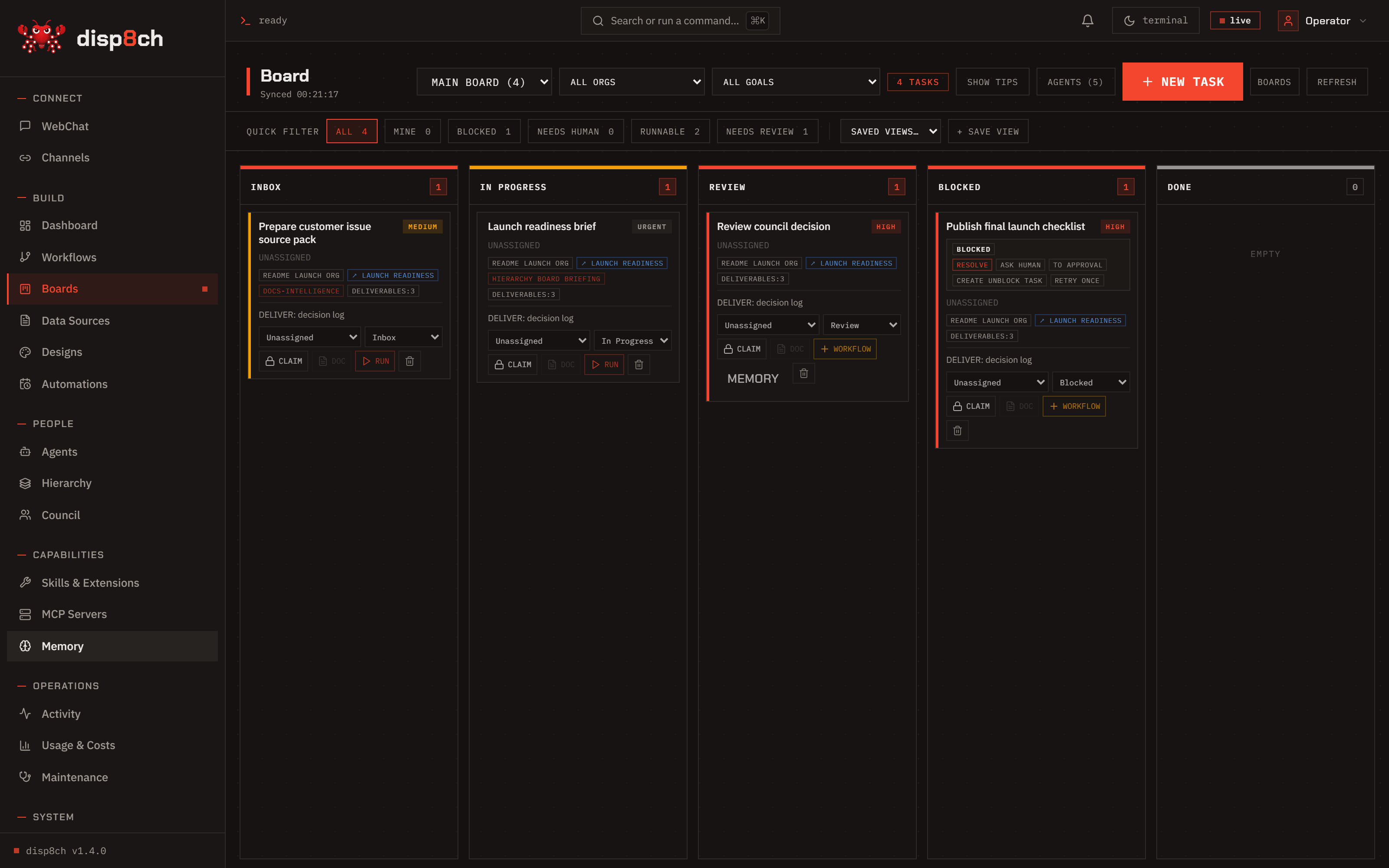
Boards
Boards turn ideas, blockers, council verdicts, source findings, and workflow output into tracked work with owners, status, history, and recovery actions.
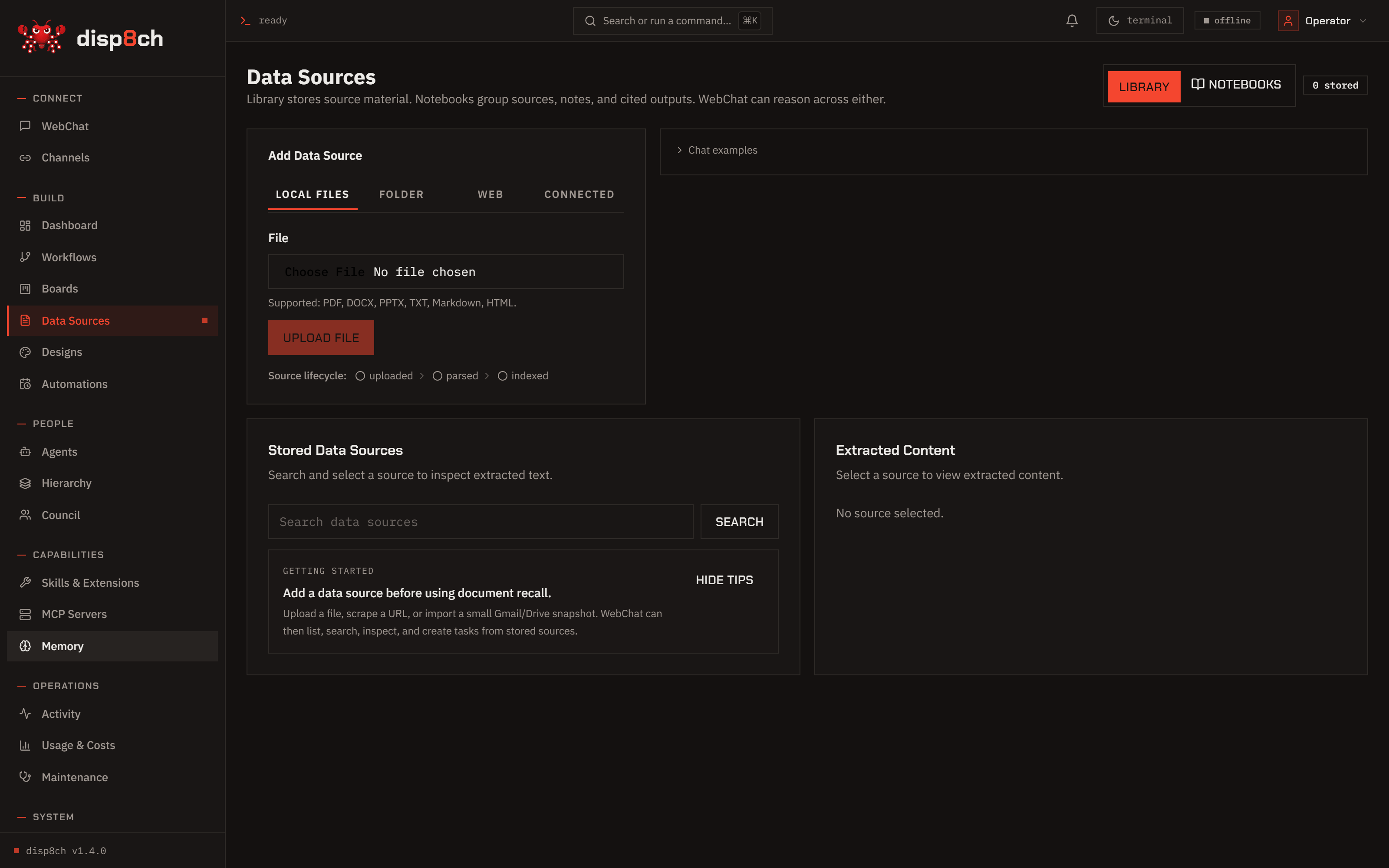
Data Sources
Data Sources imports files, local markdown folders, scraped pages, crawled docs sites, and notebooks so agents can answer with receipts and turn findings into work.
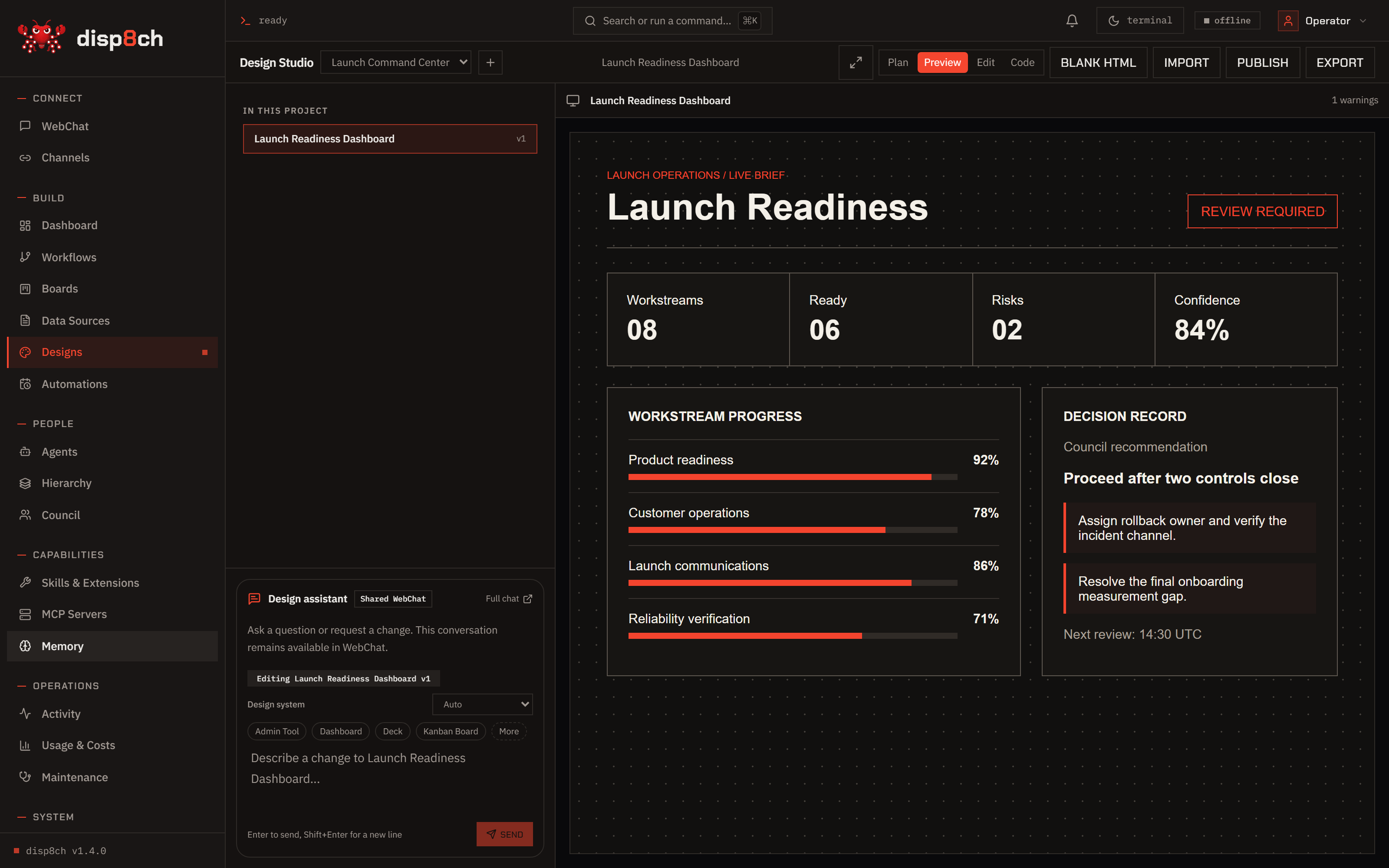
Design Studio
Design Studio turns briefs, screenshots, source imports, and templates into saved design artifacts with preview, source, validation, versions, and targeted editing.
Memory
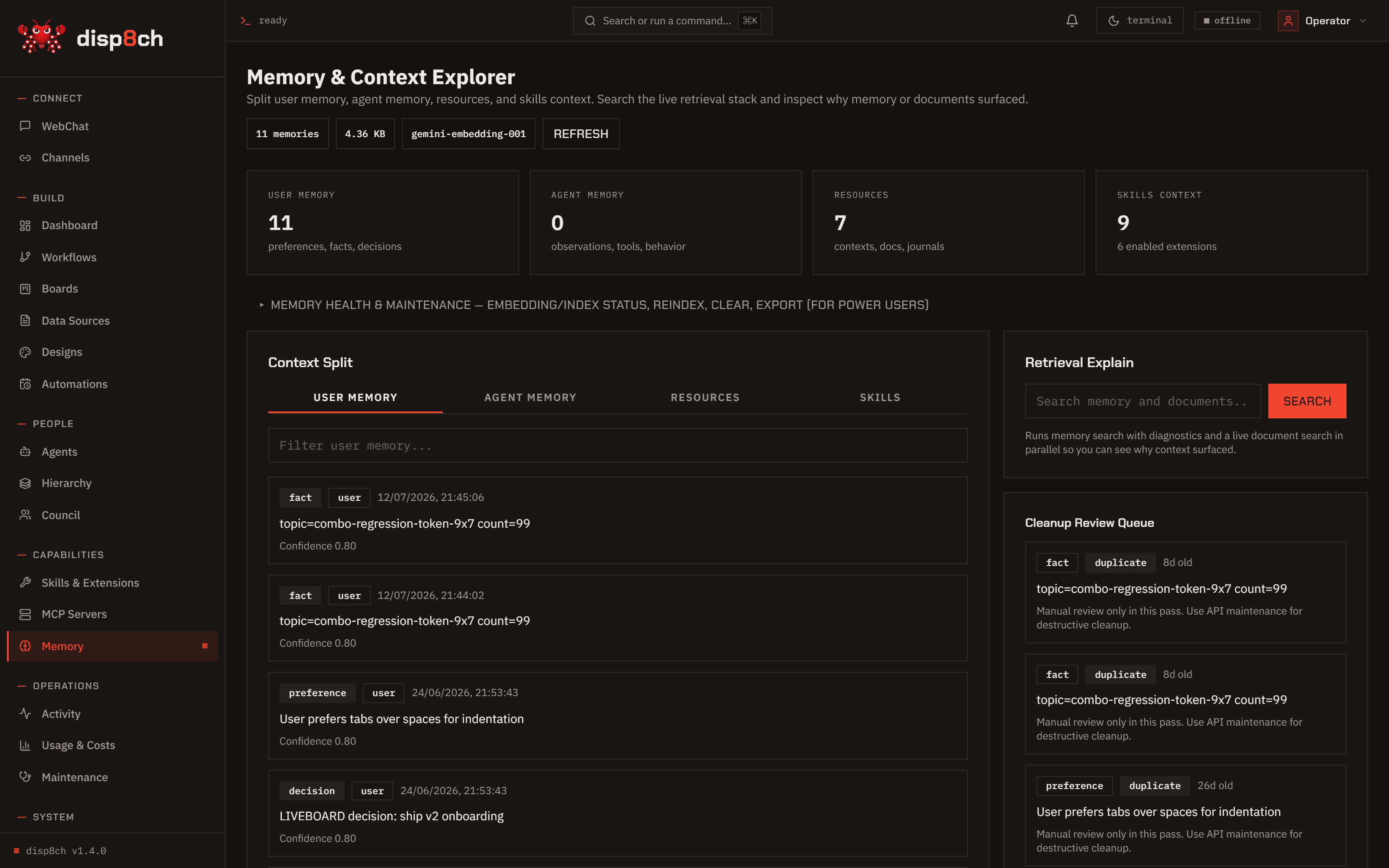
Memory in Disp8ch is local, scoped, searchable, and reviewable. The agent can propose what it learned, but you stay in charge of what becomes durable.
Local Models
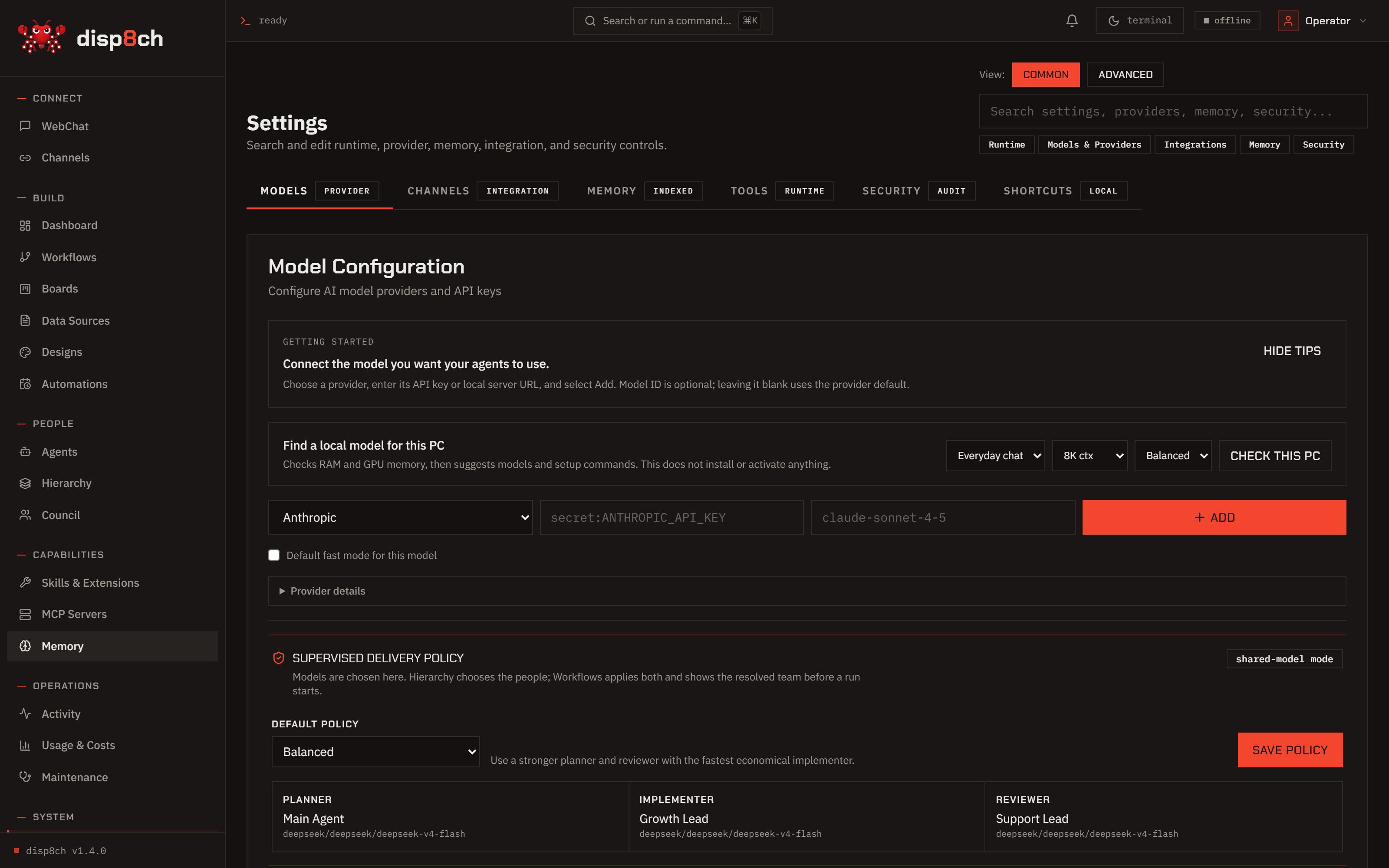
Disp8ch can use hosted providers, OpenRouter, or local OpenAI-compatible runtimes. The local path supports Ollama, LM Studio, llama.cpp, vLLM, SGLang, and similar endpoints.